
Summary: Adani Power and Bhutan’s state-owned Druk Green Power have signed a shareholders’ agreement to develop the 770 MW Chamkharchhu-I hydroelectric project. The partners will own the Bhutan project company 49:51, construction is targeted for the first half of 2027, and commissioning is planned within six years. The BOOT project carries a 30-year concession and could support seasonal clean-power exports to India.
Adani Power is adding a second large Bhutan hydropower partnership to its regional energy pipeline. The company and Druk Green Power Corporation, Bhutan’s state-owned generation utility, have formalised the ownership and development structure for the 770 MW Chamkharchhu-I project.
What Happened
Adani Power disclosed on October 6, 2026, that the shareholders’ agreement was signed on October 5. The partners will jointly incorporate a public company in Bhutan, with Adani Power holding 49% and Druk Green Power holding 51%.
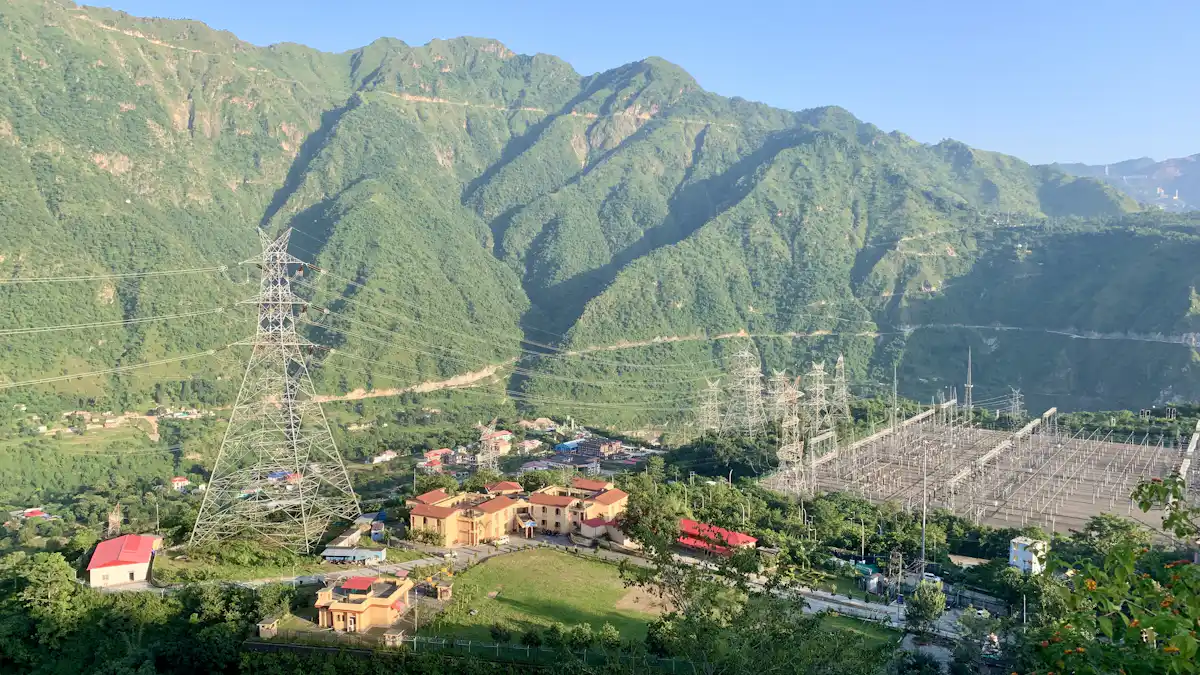
The peaking run-of-river project is planned on the Chamkharchhu River in Bhutan’s Zhemgang district. It will be developed under a Build, Own, Operate and Transfer model, with a 30-year concession from the date of commercial operation.
Construction is targeted to begin in the first half of 2027. The companies aim to commission the plant within six years of breaking ground. The total investment and financing structure were not disclosed.
Why It Matters
The agreement gives Adani Power a defined equity role in a large cross-border renewable project while keeping majority ownership with Bhutan’s state utility. Hydropower can supply dispatchable electricity when solar output falls, making it strategically useful for a region adding variable renewable capacity.
For Bhutan, the project is intended to strengthen winter energy availability and create scope to export surplus power to India during the summer. For India, future imports could add another source of low-carbon electricity, although actual volumes and tariffs will depend on construction, transmission and power-sale arrangements.
Market Impact
Adani Power shares rose about 2% to an intraday high of ₹205 on the NSE after the announcement. The timing shows a positive market response around the disclosure, but it does not prove that the hydropower agreement was the only factor driving the share-price move.
Industry Context
Chamkharchhu-I is the second major hydro collaboration between Adani Power and Druk Green after the 570 MW Wangchhu agreement announced in September 2025. It also sits within a broader 5,000 MW hydropower development partnership between the Adani Group and Bhutan.
Cross-border renewable generation requires sufficient transmission capacity and coordinated dispatch rules. India is simultaneously expanding domestic transmission infrastructure; see our related report on the ₹1.86 lakh crore Green Energy Corridor Phase III.
What To Watch Next
The next milestones are incorporation of the project company, environmental and statutory approvals, disclosure of project cost and debt funding, final engineering work and the start of construction. Investors should also watch for long-term power-purchase arrangements, cross-border transmission plans and any change to the six-year completion target.
Frequently Asked Questions
What is the Chamkharchhu-I project?
Chamkharchhu-I is a proposed 770 MW peaking run-of-river hydroelectric plant on the Chamkharchhu River in Bhutan’s Zhemgang district. It is designed to support Bhutan’s power needs and potentially export surplus clean electricity to India, subject to construction, grid connectivity and commercial arrangements.
How will Adani Power and Druk Green own the project?
The partners plan to incorporate a public company in Bhutan. Adani Power will hold 49% and Druk Green Power Corporation will hold 51%. Both sides will contribute capital in the agreed proportion, while further financing details and the project’s total investment cost have not yet been disclosed.
When will the Bhutan hydropower plant be completed?
Construction is targeted to start in the first half of 2027, and commissioning is planned within six years of groundbreaking. That schedule remains a target rather than a guarantee because large hydropower projects require extensive approvals, civil works, transmission coordination and management of geological and environmental risks.
Did the announcement affect Adani Power shares?
Adani Power rose roughly 2% and reached an intraday high of ₹205 on October 6 after the agreement was announced. The movement indicates positive trading around the news, but intraday prices reflect many factors, so it should not be treated as proof of the project’s final financial value.