
Summary: From October 15, 2026, selected UPI payments to merchants above ₹2,000 will attract a merchant discount rate, or MDR, of up to 0.4%. Customers will not pay the fee, person-to-person transfers stay free, and most merchant payments remain outside the new framework. Small merchants, essential services and capital-market payments receive separate exemptions or lower rates under the government-backed rules announced this month.
India’s new UPI pricing framework has triggered a simple but important question: will users be charged for paying through a QR code? The answer is no. The charge applies inside the merchant-payment ecosystem, and the government says banks and payment apps must prevent it from being passed to customers.
The change, set to take effect on October 15, creates a revenue stream for banks, payment service providers and UPI apps while preserving free transfers between individuals. Here is what shoppers, merchants and investors need to know.
What Happened
The National Payments Corporation of India issued circular NPCI/UPI/OC-No.237/2026-27 on September 15, introducing MDR on selected person-to-merchant, or P2M, UPI payments above ₹2,000. The framework takes effect on October 15, 2026.
- Regular merchant payments: MDR of up to 0.4% above ₹2,000. The charge is capped at ₹300 for a transaction of ₹75,000 or more.
- Essential and thin-margin sectors: Railways, telecom, insurance, fuel and agricultural inputs will face a flat ₹5 MDR on qualifying transactions above ₹2,000.
- Capital-market payments: Mutual funds, securities, stockbrokers and dealers will attract 0.02% MDR, capped at ₹300.
- Person-to-person transfers: P2P UPI transfers remain free regardless of the amount.
- Payments up to ₹2,000: P2M transactions at or below this threshold remain free of MDR.
The Ministry of Finance clarification published on September 15 says approximately 96% of merchant transactions will remain unaffected. It estimates that only about 4% of P2M transactions fall within the new MDR scope.
Who Is Exempt
Small merchants, including street vendors and neighbourhood shops, remain under zero MDR when they receive up to ₹1 lakh per month through UPI QR codes in the Person-to-Person-Merchant, or P2PM, category. This monthly receipt threshold matters: the exemption is not simply based on the value of one purchase.
Customers also remain outside the charging mechanism. The government says UPI app providers cannot impose a platform fee or hidden charge, and banks have been advised to ensure merchants do not pass MDR directly to customers. Daily transfer limits set by banks or NPCI are security controls, not fee thresholds.
Why It Matters
UPI’s growth was built on instant, low-friction payments with no MDR. The new framework tries to keep that experience intact for individuals and small merchants while funding the infrastructure behind a much larger payment network.
MDR revenue will be shared across participating banks, payment service providers and UPI applications. The government says the money is intended to support infrastructure, cybersecurity, fraud prevention, customer service and further network expansion. A dedicated small-merchant adoption fund is also planned, financed with an amount equivalent to 5% of total MDR collections.
For larger merchants, the change creates a new acceptance cost that will vary with ticket size and transaction mix. A ₹5,000 qualifying payment at the maximum 0.4% rate would generate ₹20 in MDR; a ₹75,000 regular merchant payment would hit the ₹300 cap. Those amounts are charged within the merchant ecosystem, not added as a customer checkout fee.
Market Impact
Listed payments and banking companies reacted on September 16, the first trading day after the announcement. Reuters reported that Paytm, Axis Bank and Yes Bank gained between 2% and 8% in early trade. Pine Labs and MobiKwik rose initially but later reversed into losses, showing that the reaction was not uniformly positive.
There is no fresh Sunday share-price move to report because Indian equity markets are closed. The longer-term earnings impact is also not yet demonstrated: it will depend on each company’s qualifying transaction mix, exemptions and the final distribution of MDR among ecosystem participants. Paytm and MobiKwik have separately told exchanges that the framework can create additional merchant-business revenue, but neither disclosure establishes the eventual profit contribution.
Industry Context
Reuters reported that UPI processed 24 billion transactions worth about $311 billion in August 2026. That scale makes even a narrowly applied fee commercially significant, although the exemptions are designed to keep routine household and small-shop payments free.
The new MDR could improve the economics of maintaining UPI services, but it may also renew debate over concentration among payment apps and how merchants absorb acceptance costs. For investors following the lower 0.02% rate on capital-market payments, BusinessNews1 has separately covered SEBI’s 13 capital-market reforms approved this month.
What To Watch Next
- Implementation guidance from banks, acquiring institutions and payment apps before October 15.
- How merchant dashboards classify P2M, P2PM, essential-service and capital-market transactions.
- Whether invoices or settlement statements clearly identify MDR without adding it to the customer’s bill.
- Company disclosures quantifying eligible transaction volumes or expected revenue.
- Details of the dedicated small-merchant fund and how its 5% contribution mechanism will operate.
Frequently Asked Questions
Will customers pay a UPI fee from October 15?
No. The MDR applies within the merchant-payment ecosystem and is not a charge on customers. The government says app providers cannot impose platform or hidden fees, while banks should ensure merchants do not pass MDR directly to shoppers. Person-to-person UPI transfers also remain free regardless of value.
Which UPI merchant payments will attract 0.4% MDR?
Selected person-to-merchant payments above ₹2,000 can attract MDR of up to 0.4%. The charge is capped at ₹300 once the transaction reaches ₹75,000. Separate, lower pricing applies to essential sectors and capital-market payments, while qualifying small merchants remain protected by zero-MDR rules.
Are small shops and street vendors exempt?
Yes, when they meet the specified P2PM condition. Small merchants receiving up to ₹1 lakh per month through UPI QR codes continue to have zero MDR on those transactions. The exemption uses monthly UPI receipts, so merchants should confirm how their bank or payment provider classifies the account.
What is the UPI MDR for fuel, railways and insurance?
Qualifying UPI merchant payments above ₹2,000 in essential and thin-margin sectors—including railways, telecom, insurance, fuel and agricultural inputs—will attract a flat ₹5 MDR per transaction. The special rate provides cost certainty and replaces the regular percentage-based charge for covered categories.
Sources
- Department of Financial Services: MDR FAQs, September 15, 2026
- Press Information Bureau: UPI fee clarification, September 15, 2026
- NPCI: UPI circulars
- Reuters: UPI MDR framework, September 15–16, 2026
- Reuters: payment-company market reaction, September 16, 2026
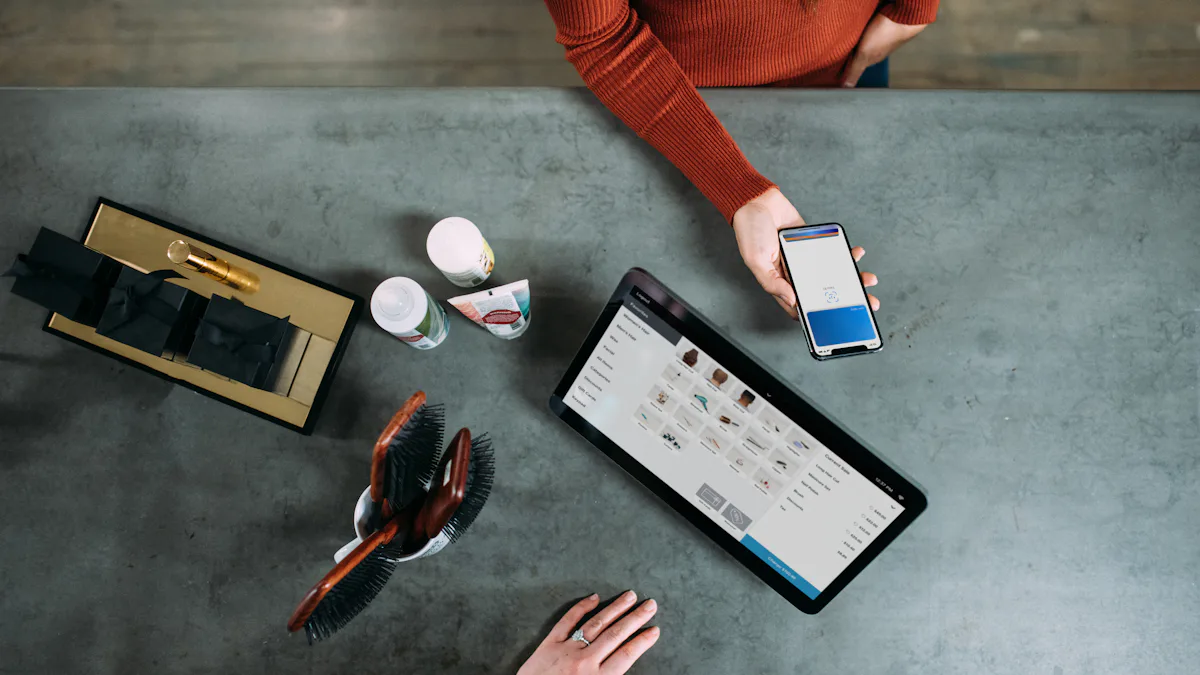
Photo: Blake Wisz/Unsplash.